- About Us
- Programmes
- Publications
- Researchers
- Public Lectures
- Resource Centre
- Gallery
- Archives
- Directories & Documents
- Media Programme
- Winter Course on Forced Migration
- Research Activities
- Past Annual Reprots


|
|
|
|
|
|
|
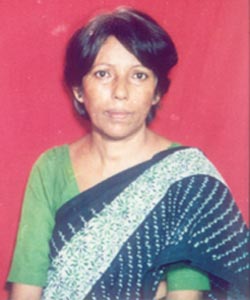
Krishna
BANDYOPADHYAY,
an invitee board member of CRG, is the editor of the Bengali feminist journal,
Khoj (Search), an organ of the women’s voices for justice and dignity in
West Bengal. She is also a founder member of the Pakistan-India People’s
Forum for Peace and Democracy in West Bengal and was one of the leading
organisers of the unforgettable people’s conference of Pakistani and Indian
peace and human rights activists in Calcutta in 1996, which has already
become a legend in people’s movement for sub-continental peace and harmony.
Author of numerous essays on women’s rights and the fight against
communalism, she is also a researcher on trans-border migration and
trafficking of women from Bangladesh to West Bengal. |
|
|
|
|
|
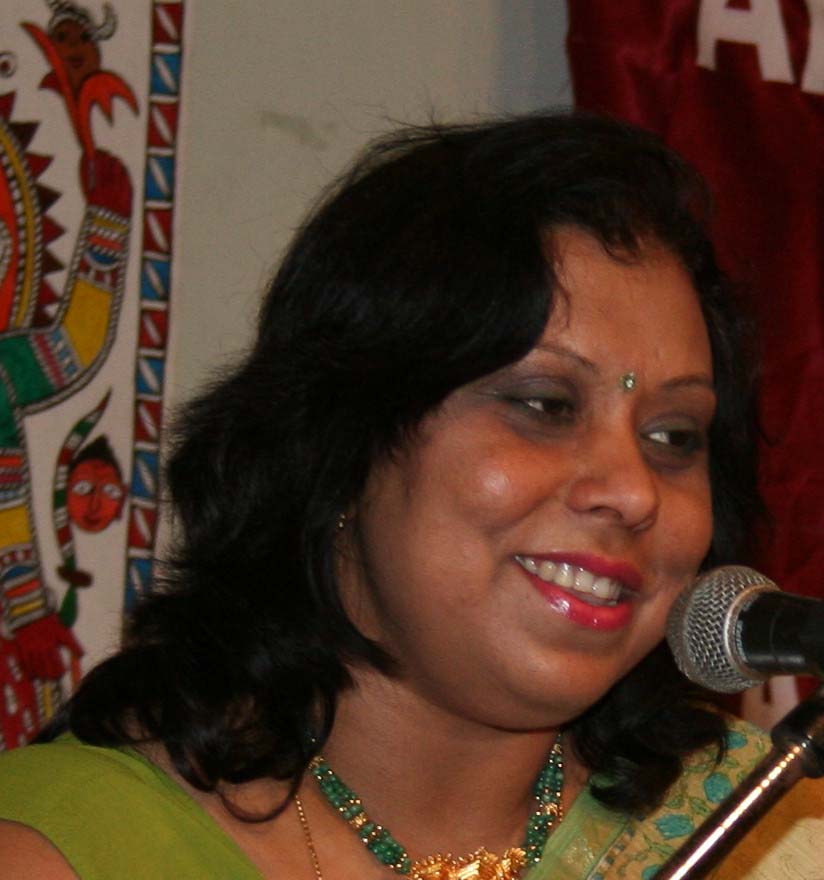
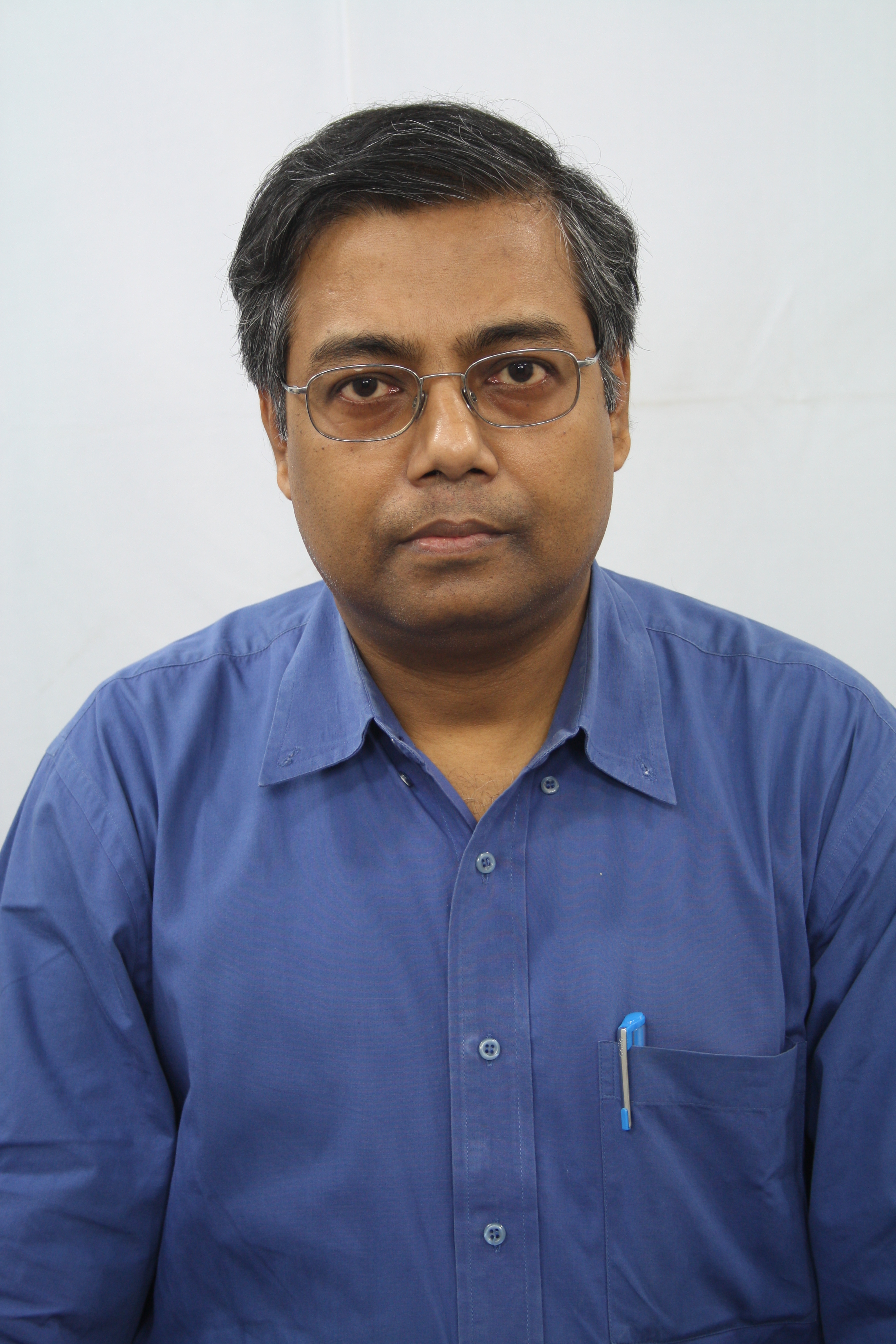
Dr. Paula BANERJEE, the president of CRG, is an expert on Indo-American relations and studied in Cincinnati, Ohio. As part of her current work on borders and women, she has authored numerous papers on women in conflict situations in northeast India. She is a full time faculty member in the Department of South and South East Asian Studies, University of Calcutta. She has authored a book on Indo-US relations, titled When Ambitions Clash (2003), and has co-authored a book, Women in Society and Politics in France. Dr. Banerjee is the recipient of a number of international fellowships including the Advanced Taft Fellowship (1991-1993) and has been the recipient of the WISCOMP Fellow Of Peace Award (2001). Currently she is working on women in peace movements in South Asia and on borders and boundaries in the region. She is now the editorial board member of the Refugee Watch. Email: paula@mcrg.ac.in For details of his publications, lectures, interviews and some of the courses offered by her CLICK HERE |
|
|
|
|
|
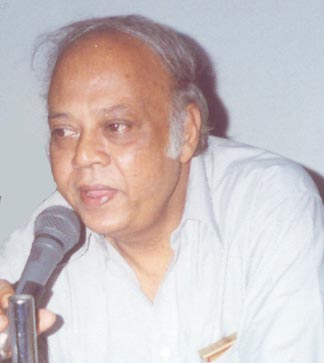
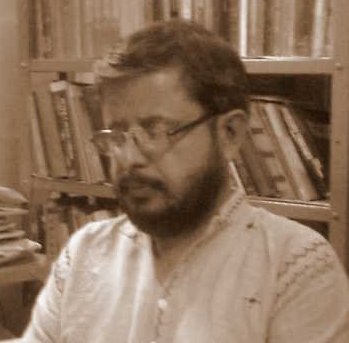
Dr. Sibaji Pratim BASU, the treasurer of CRG, is Associate Professor of Political Science at Sri Chaitanya College, West Bengal, India. A regular contributor to academic journals and popular dailies, periodicals and news channels, he specializes in Modern Indian Political Thought and Political and Socialist Thought. He is also interested in issues of forced migration in contemporary South Asia and ‘sustainable rights’ of the people in the Indian context. His book, The Poet and The Mahatma: Engagement with Nationalism and Internationalism (Progressive Publishers, Kolkata, 2009) has received much critical acclaim. He is also the editor of The Fleeing People of South Asia: Selections from Refugee Watch and Politics in Hunger Regime (with Geetisha Dasgupta). |
 |
|
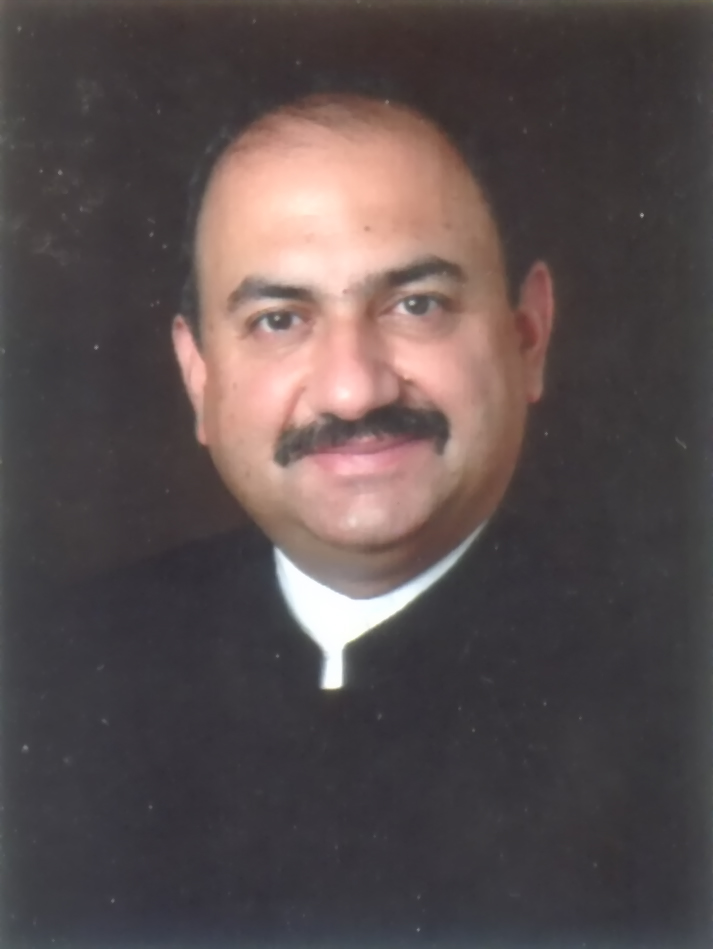
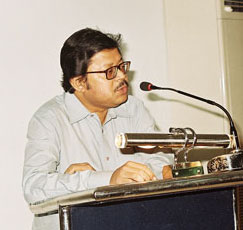
Dr. Sabyasachi BASU RAY CHAUDHURY
is Professor, Department of Political Science and
Director, Centre for Nepal Studies at the Rabindra Bharati University,
Kolkata. His areas of interest include South Asian studies, in particular,
politics of globalisation, democracy, development, displacement, human
rights and justice in South Asia. He is among the few experts on the Andaman
and Nicobar Islands that India has. He is a regular contributor to academic
journals, periodicals, dailies, news channels and portals. His recent
publications include: Indian
Autonomies: Key Words and Key Texts, (co-edited with Ranabir Samaddar
and Samir Kumar Das), Sampark, Kolkata, 2005, and Internal
Displacement in South Asia: The Relevance of UN’s Guiding Principles,
(co-edited with Paula Banerjee and Samir Kumar Das), Sage Publications, New
Delhi, 2005. Email:
sabyasachi@mcrg.ac.in
|
 |
|
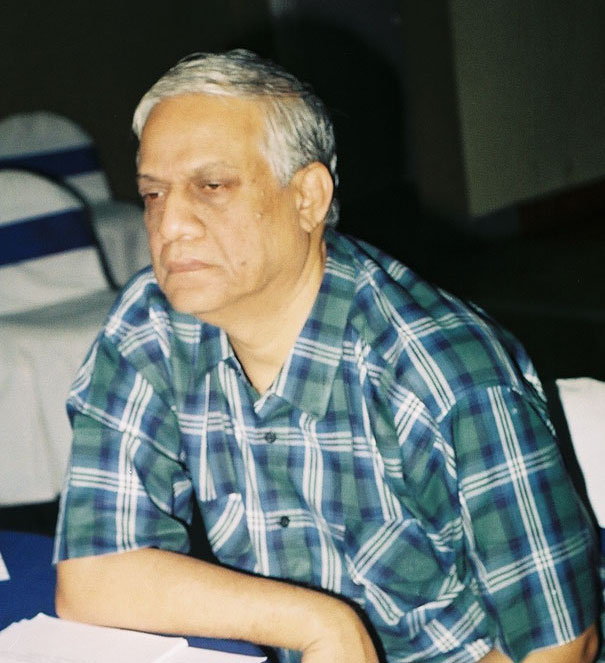
Dr. Pradip Kumar BOSE, an invitee board member of CRG, is a Professor of Sociology, Centre for Studies in Social Sciences, Calcutta. A leading sociologist of the country, an expert in research methodology, and above all known as a superb essayist, he writings in English and Bengali on tribes, castes and families in Bengal are widely read. His work on the cultural history of Bengal has been equally significant. Among his works are, Classes in Rural Society: A Sociological Study of Some Bengal Villages (1984) and Classes and Class Relations among Tribals in Bengal (1985). Besides, he has edited a classified compilation of Bengali journals of nineteenth century, the first volume of which is titled as, Samayiki: Purono Samayik Patrer Prabandha Sankalan, Vol.1 - Bigyan o Samaj (1998). He has also edited, Refugees in West Bengal – Institutional Practices and Contested Identities (2001), a seminal work on refugee flows and practices of care and rehabilitation in West Bengal in the first decade following independence. Email: pradip@cssscal.org |
 |
|
Subhas Ranjan CHAKRABORTY,
an invitee board member of CRG,
is one of the well-known teachers of History, who
has inspired generations of students of the city in the musings of Cleo. He
specialises in European History, and combines with this knowledge of
European history his deep understanding of the society and politics of
Darjeeling, which has brought a distinct edge to CRG researches on
conditions of autonomy in India. He has authored several essays on the
history Darjeeling, and was one of the organisers of the first Critical
Asian Studies Workshop in West Bengal in 1998.
|
|
|
|
Dr. Sanjay CHATURVEDI is Professor of Political Science at Panjab University, Chandigarh. His area of specialization is the theory and practice of Geopolitics; with special reference to Polar Regions and the Indian Ocean Region. He did his M.A., M.Phil. and Ph.D. from Panjab University, Chandigarh. He was awarded the Nehru Centenary British Fellowship, followed by a highly coveted Leverhulme Trust Research Grant, to pursue his post-doctoral research at University of Cambridge, England, from 1992 to 1995. He serves on the international editorial board of journals like, Geopolitics (London: Routledge), and Co-operation and Conflict (New York: Sage). He is the only South Asian to serve on the Steering Committee of International Geographical Union (IGU) Commission on Political Geography, for the terms 2004-2008, 2008-2012. He is also the Co-Chair of Research Committee 15 (RC 15 on Political and Cultural Geography) of the International Political Science Association (IPSA). He is the author of The Dawning of Antarctica (South Asia Books,1990); Polar Regions: A Political Geography (John Wiley & Sons, 1996); co-author of Partitions: Reshaping Minds and States (Routledge, 2005); and co-editor of State of Justice in India: Marginalities and Justice (Sage, 2008) Geopolitical Orientations Regionalism and Security in the Indian Ocean (SAP, 2004); Energy Security and the Indian Ocean Region (SAP, 2005); and Globalization: Spaces, Identities and Insecurities (SAP, 2005). Email: mcrg@mcrg.ac.in, sanjay_1999_99_99@yahoo.com |
|
|
|
Dr. Samir Kumar DAS, is
presently a Professor in the Department of Political Science, University of
Calcutta. His researches on the society and politics of the Northeast, and
Assam in particular, are widely known. Apart from being a regular
contributor to some of the research journals of the country as well as
abroad, his book ULFA: A Political Analysis (1994) and Regionalism
in Power: The Case of Asom Gana Parishad (1998) are significant
instances of applying insights of social theory to area studies. He serves
on the editorial board of the South Asian Peace Studies Series.
Email:
samir@mcrg.ac.in
|
|
|
|
Dr.
Kalpana KANNABIRAN , the Vice-President of the CRG, is Chairperson of the Chityala Ailamma Centre for
Interdisciplinary Research, set up by Asmita Resource Centre for Women. She
was Professor of Sociology at NALSAR University of Law, Hyderabad. She was
the Chair of RC32 (Women in Society) of the International Sociological
Association from 2002-2006 and General Secretary of the Indian Association
for Women’s Studies in 1998-2000. She was a member of the Expert Group on
the Equal Opportunity Commission, Ministry of Minority Affairs, Government
of India, 2007-2008, and is currently member of the Expert Group on Legal
Education Reform in Kerala, Government of Kerala. Apart from a doctorate in
Sociology from Jawaharlal Nehru University, New Delhi she received the
Rockefeller Humanist in Residence Fellowship at Hunter College, CUNY
1992-1993 and VKRV Rao Award for Social Science Research in the field Social
Aspects of Law in 2003 from the Indian Council for Social Science Research.
Her areas of specialisation are sociology of law, jurisprudence and gender
studies. Most recently, she has co-edited, Challenging the Rule(s) of
Law: Essays on Colonialism, Criminology and Human Rights (2008),
Sage Publications, New Delhi. |
|
|
|
V RAMASWAMY is a Calcutta-based business executive, grassroots organiser, social planner, teacher, writer and translator. After completing his studies in economics, Ramaswamy has been engaged since 1984 in working with and for the labouring poor in Calcutta for their shelter rights. He has been a member of Unnayan, a social action group in Calcutta, and TARU, an Indian research and consulting network. In 1995, he developed a proposal for comprehensive area renewal through slum redevelopment in the blighted canal-side area of Beliaghata in Calcutta. He has undertaken research studies for the Govt of India and international agencies like the World Bank, and was Social Development Coordinator of the Calcutta Environmental Management Strategy & Action Plan, a project of the Dept of Environment, Govt of West Bengal. In 1997, he established Howrah Pilot Project, in Priya Manna Basti, a century-old jute workers' settlement in Shibpur, Howrah. HPP works to build awareness, capabilities and leadership for community development among slum youth. Ramaswamy has taught economics at St Xavier's College, Calcutta and at Calcutta International School, and urban sociology at the Dept of Architecture, Jadavpur University. He is currently Guest Faculty in the Centre for Urban Economic Studies, Calcutta University. |
|
|
|
Dr. Prasanta RAY, the secretary of the CRG, is currently an Emeritus Professor of Sociology and Political Science, Presidency College, Kolkata; Honorary Visiting Professor, Institute of Development Studies, Kolkata; Guest, Professor, Department of Sociology, Calcutta University; and Member, CRG. E-mail: pr_forever@rediffmail.com |
|
|
|
|
||
|
|
|
|